CENTRAL FIREPLACE: MORE THAN A POSITION, A SPATIAL APPROACH
A fireplace detached from the wall, without necessarily being placed at the centre
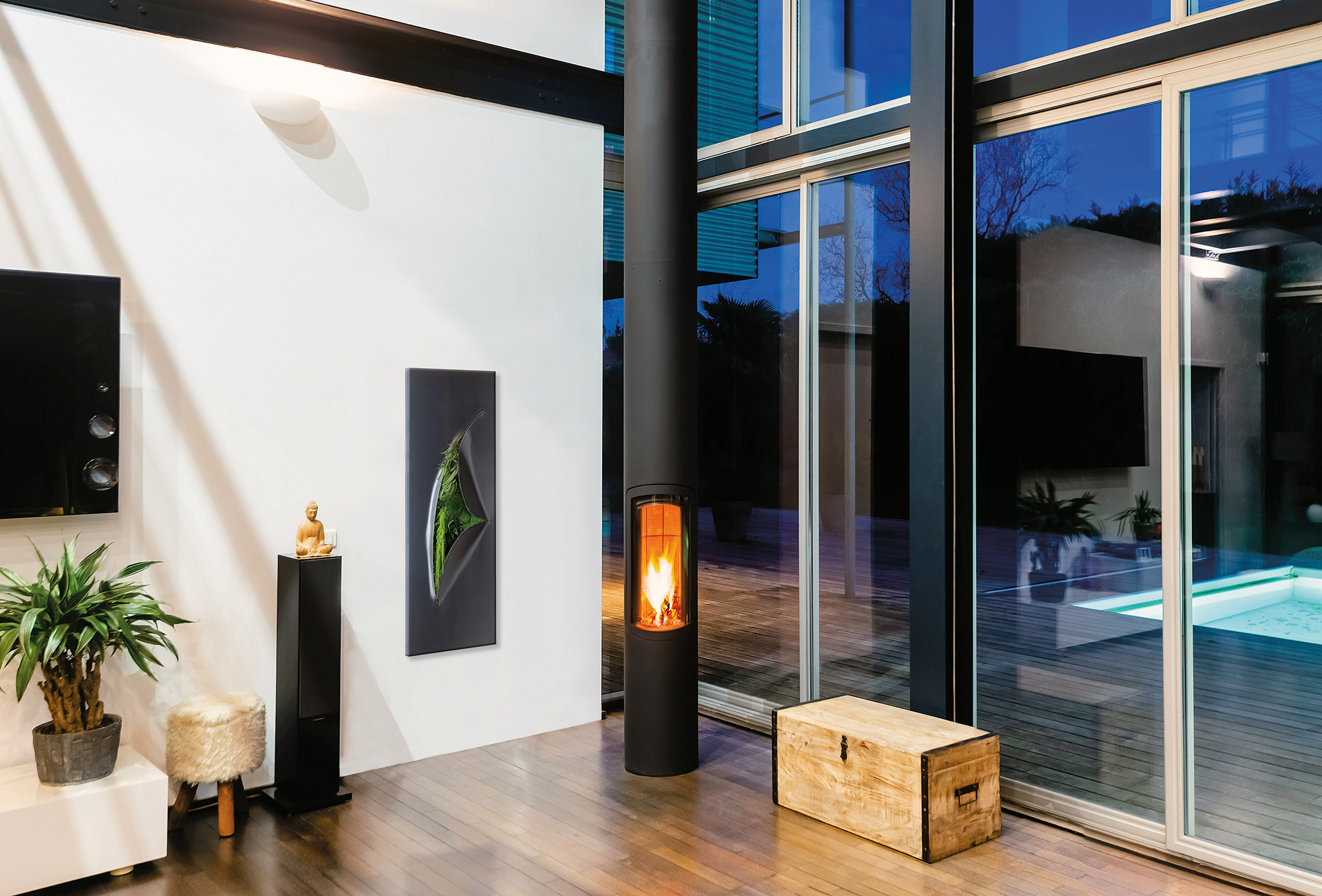
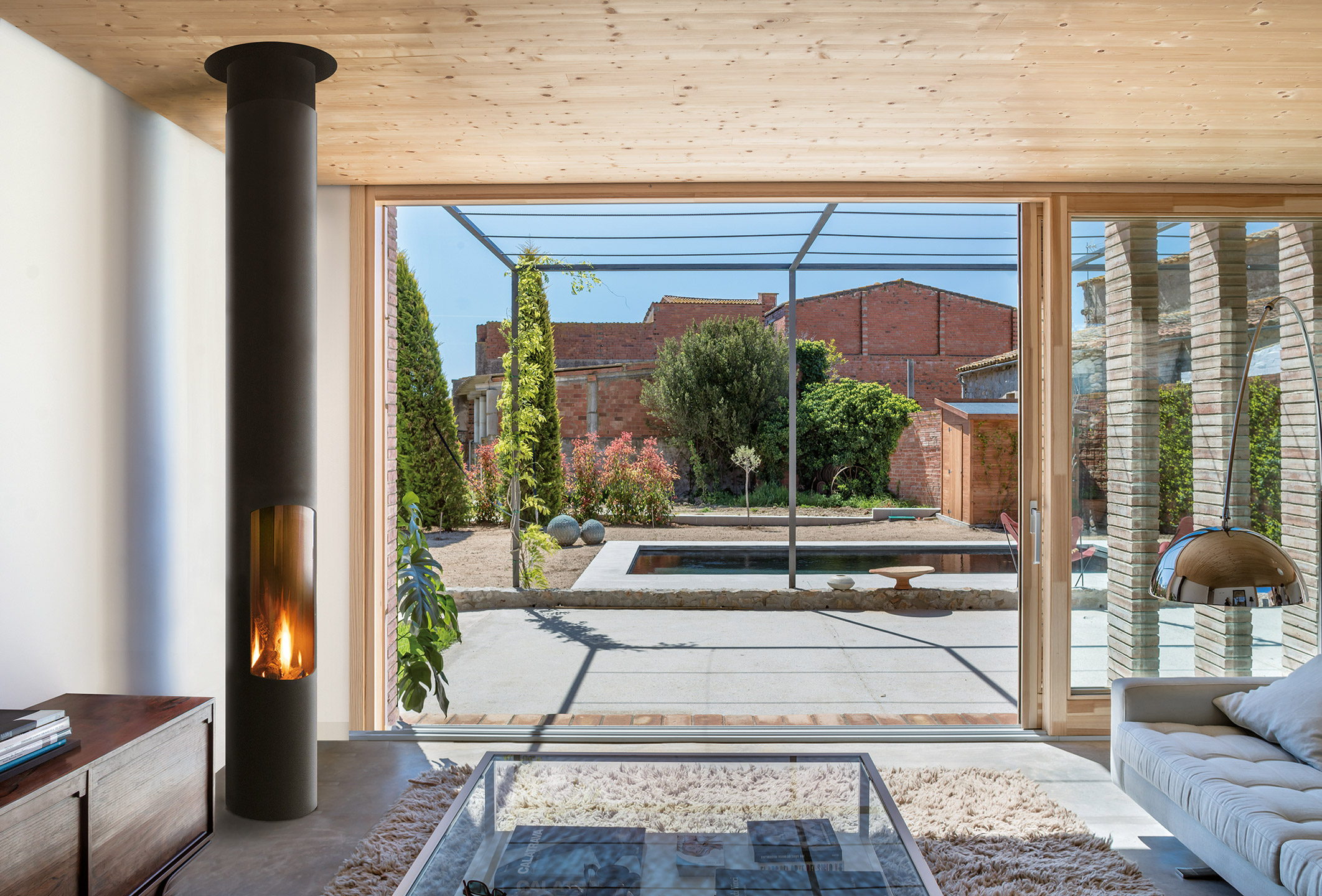
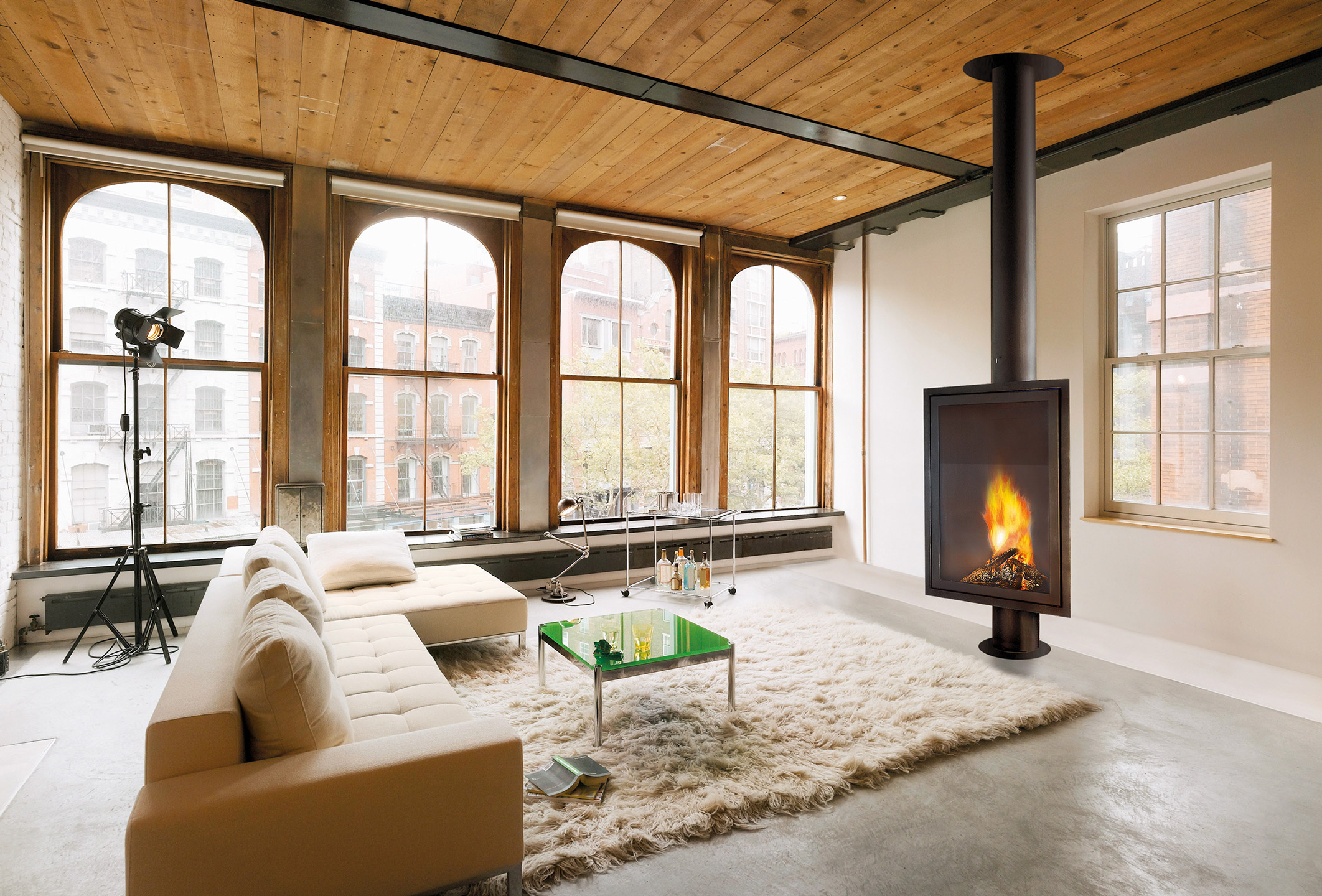
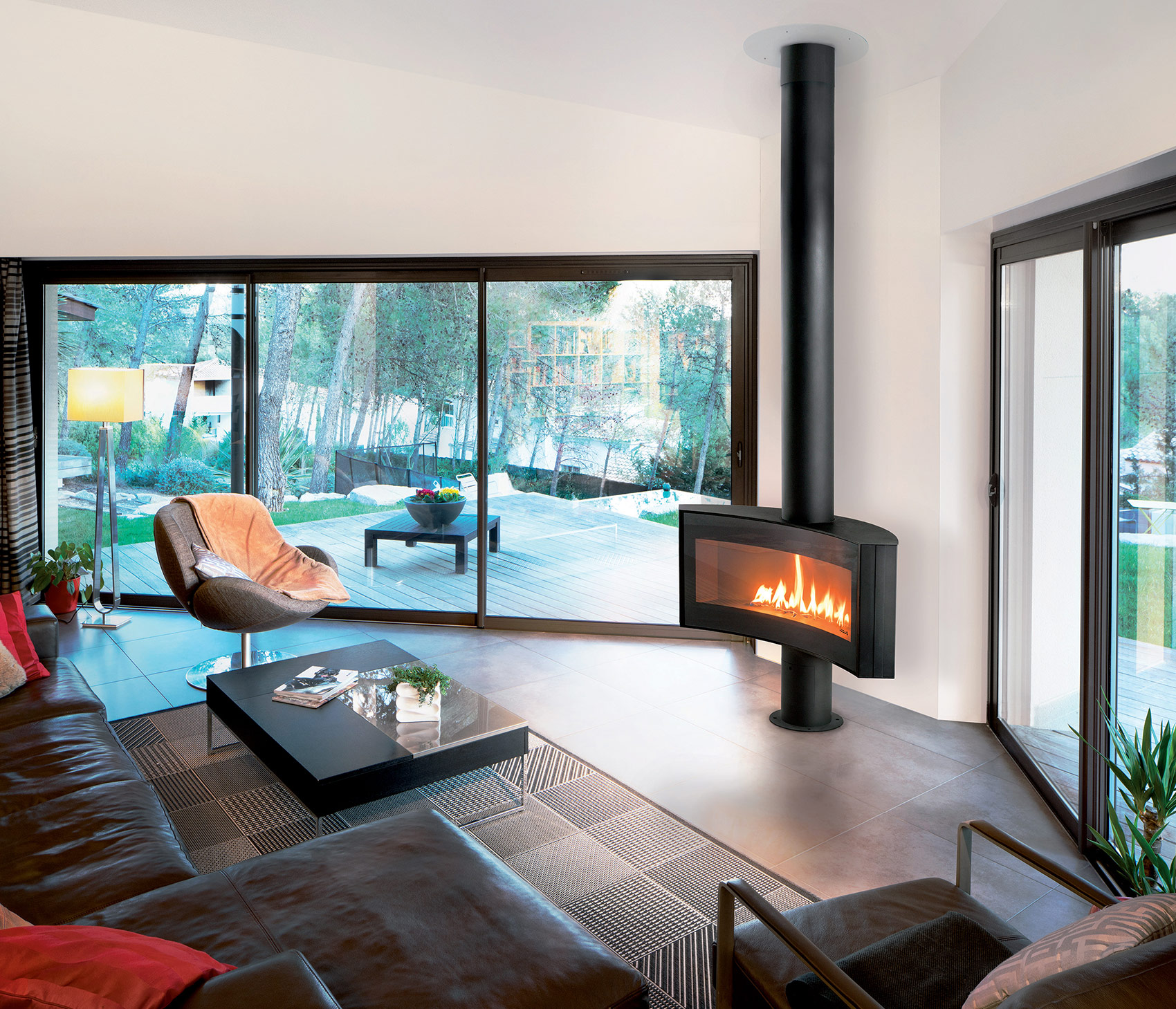
By definition, a central fireplace is detached from the wall. It is defined less by its exact position within the room than by the way it is integrated into the volume. While the term may suggest a fireplace placed in the middle of the room, a central fireplace can equally sit at the heart of a living space, be offset to one side, positioned between two living areas or installed close to a wall without being fixed against it.
Freedom of placement within the floor plan
The positioning of a central fireplace requires careful consideration, as it directly influences the organisation of the space and circulation throughout the room. In every case, its placement shapes the way the fire is perceived and experienced, depending on the chosen model and its opening configuration.
WHY CHOOSE A CENTRAL FIREPLACE FOR AN INTERIOR DESIGN PROJECT?
Creating a focal point and organising the living space around it
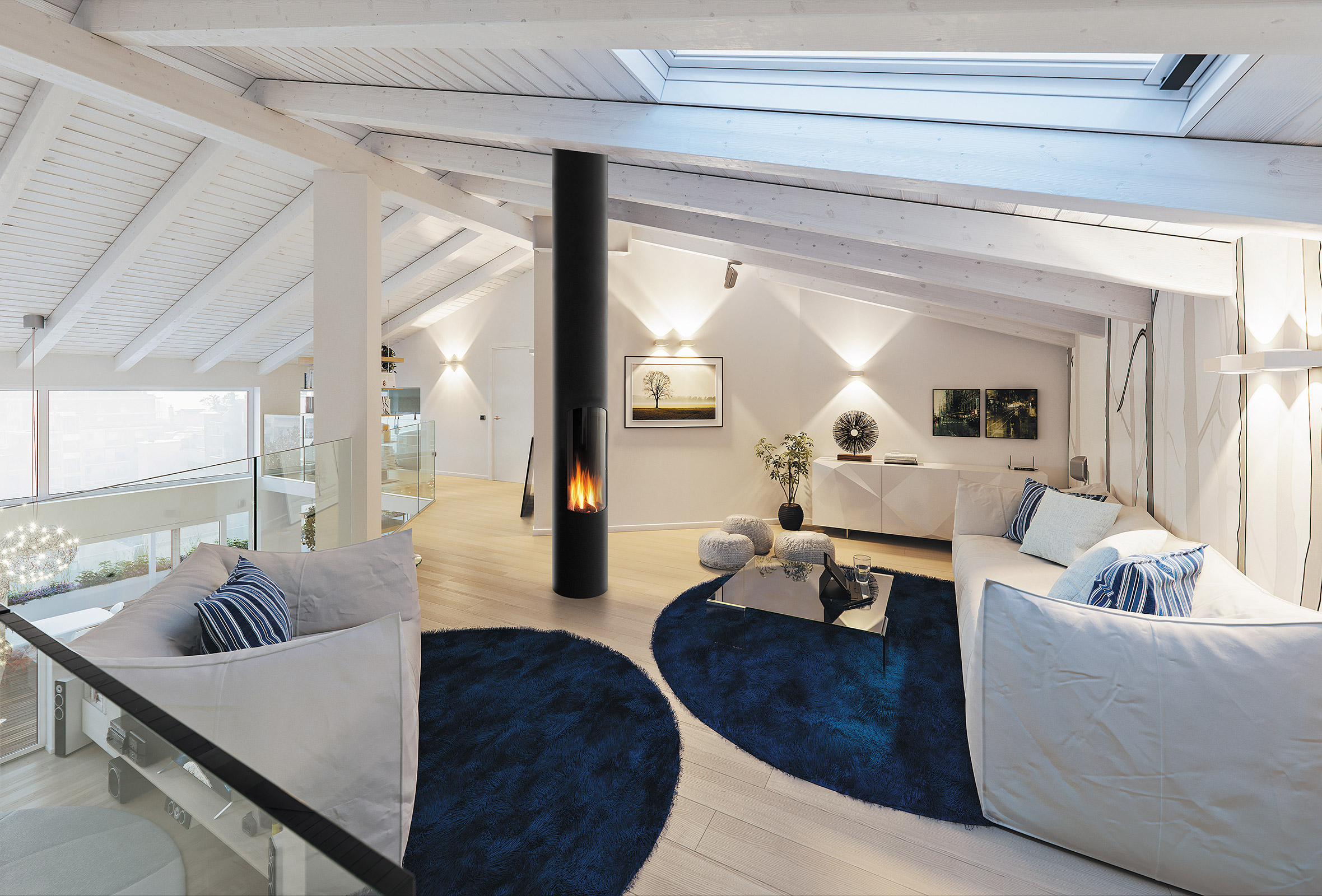
Placed within a living area, a central fireplace naturally draws the eye and becomes an anchor point within the room. It structures the layout of the living space by organising furniture and everyday living around the fire. Sofas, seating arrangements and circulation paths are all defined in relation to its presence, creating a welcoming atmosphere.
Separating spaces without partitioning them
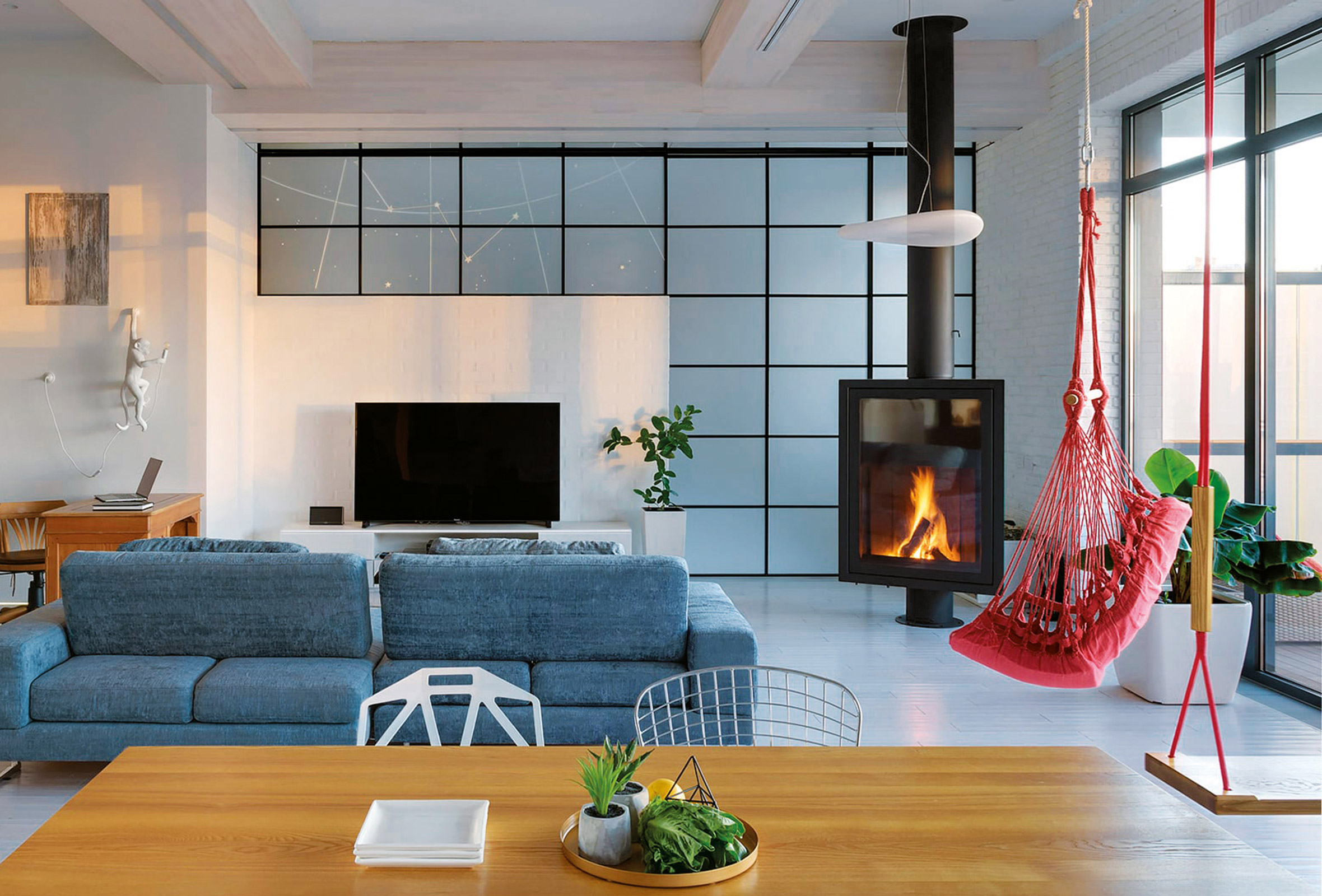
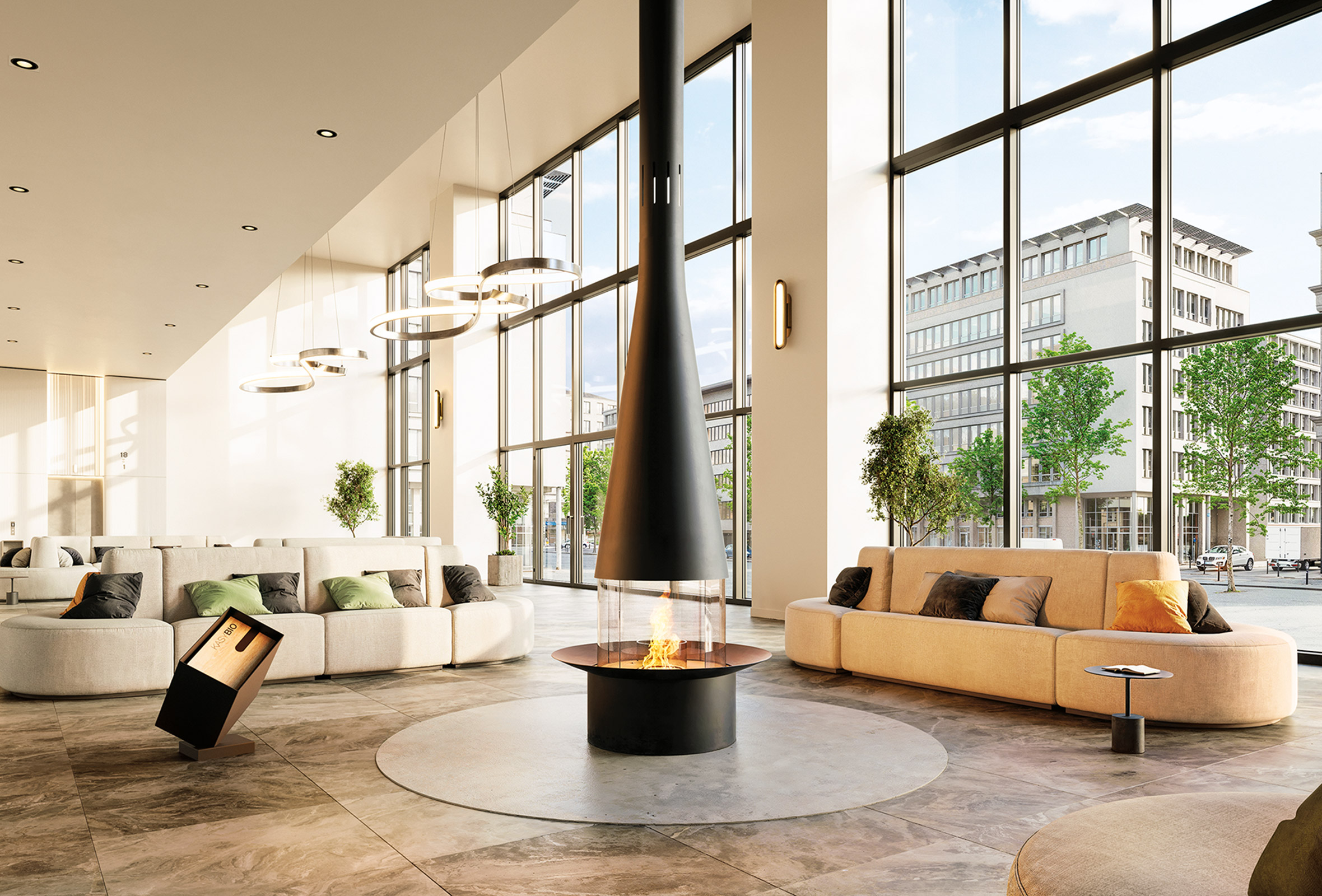
A central fireplace allows different areas to be defined without introducing solid partitions. Positioned between a lounge and dining area, or between a living room and kitchen, it creates a transition while preserving visual continuity. It acts as an interface within the architecture: structuring the space without enclosing it, while maintaining fluid volumes and clearly defining distinct uses.
Structuring volume and creating rhythm within the space
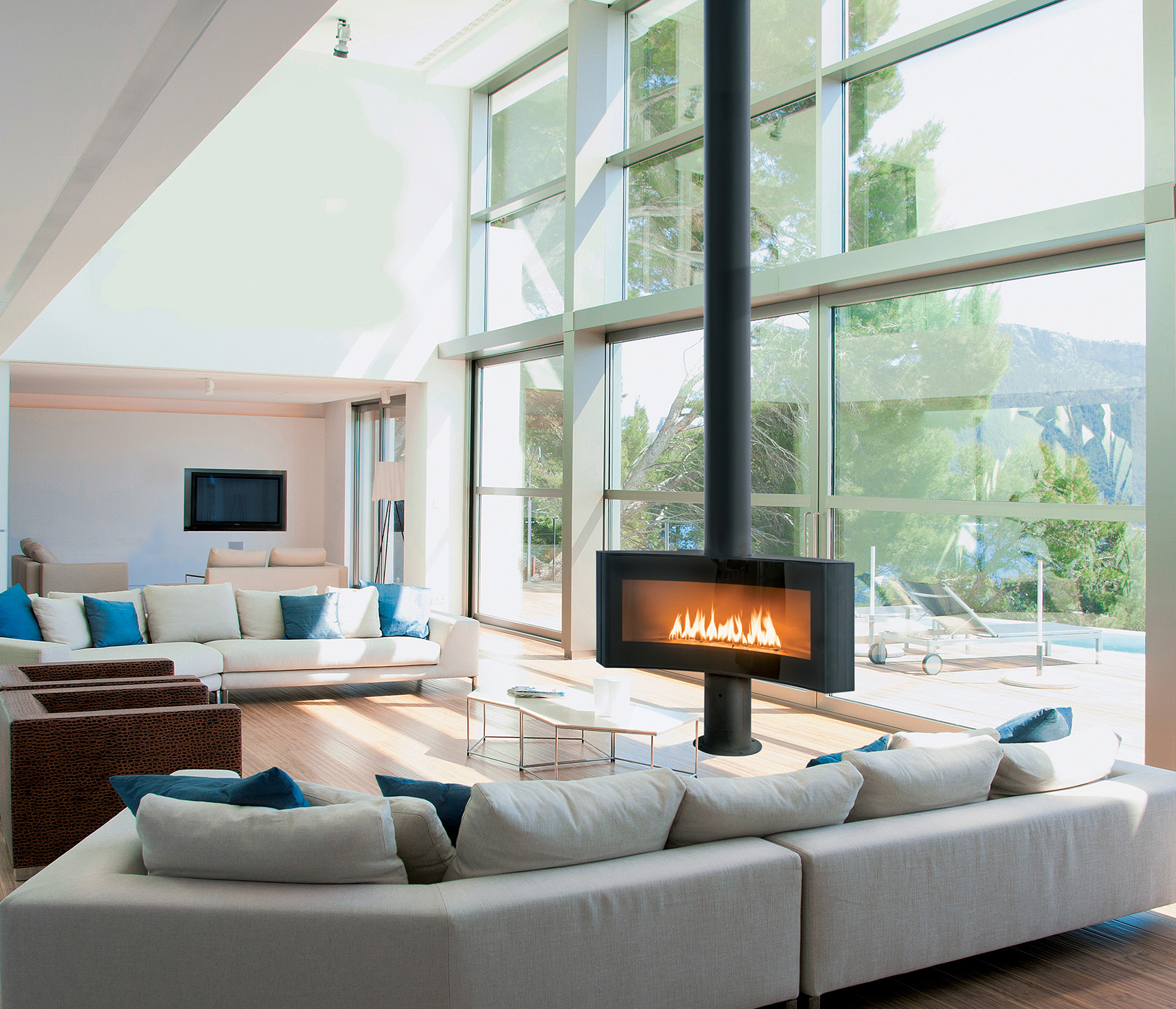
In open-plan or large interiors, a central fireplace prevents the space from feeling empty. It introduces a visual landmark and contributes to the overall composition of the interior. Through its presence, it creates rhythm, establishes spatial sequences, and gives greater clarity to the perception of volume. In this way, it can rebalance a room, reinforce a perspective or support an existing architectural layout.
WHAT CONSTRAINTS SHOULD BE CONSIDERED WHEN INSTALLING A CENTRAL FIREPLACE?
Suspended or floor-standing central fireplaces: two installation approaches
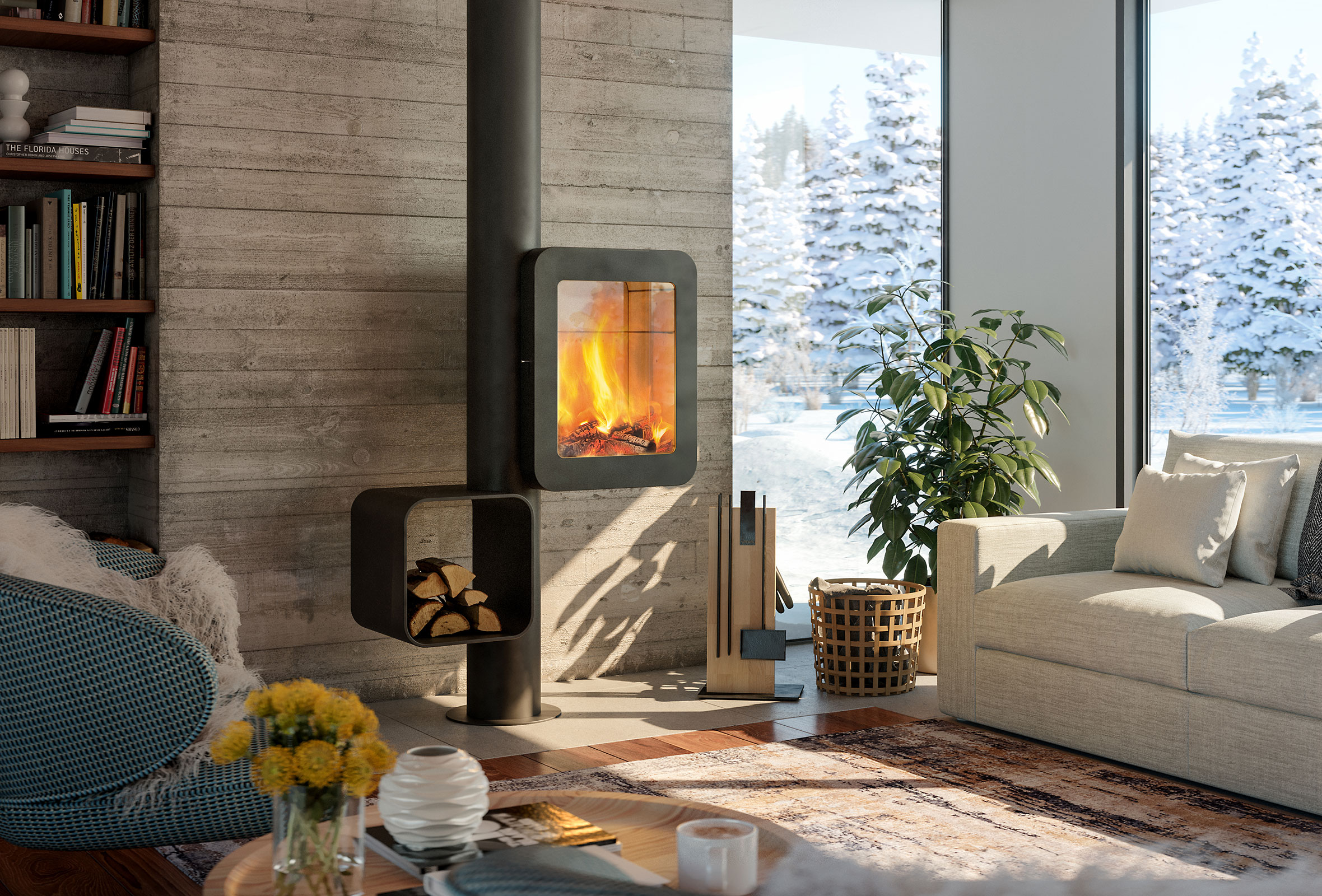
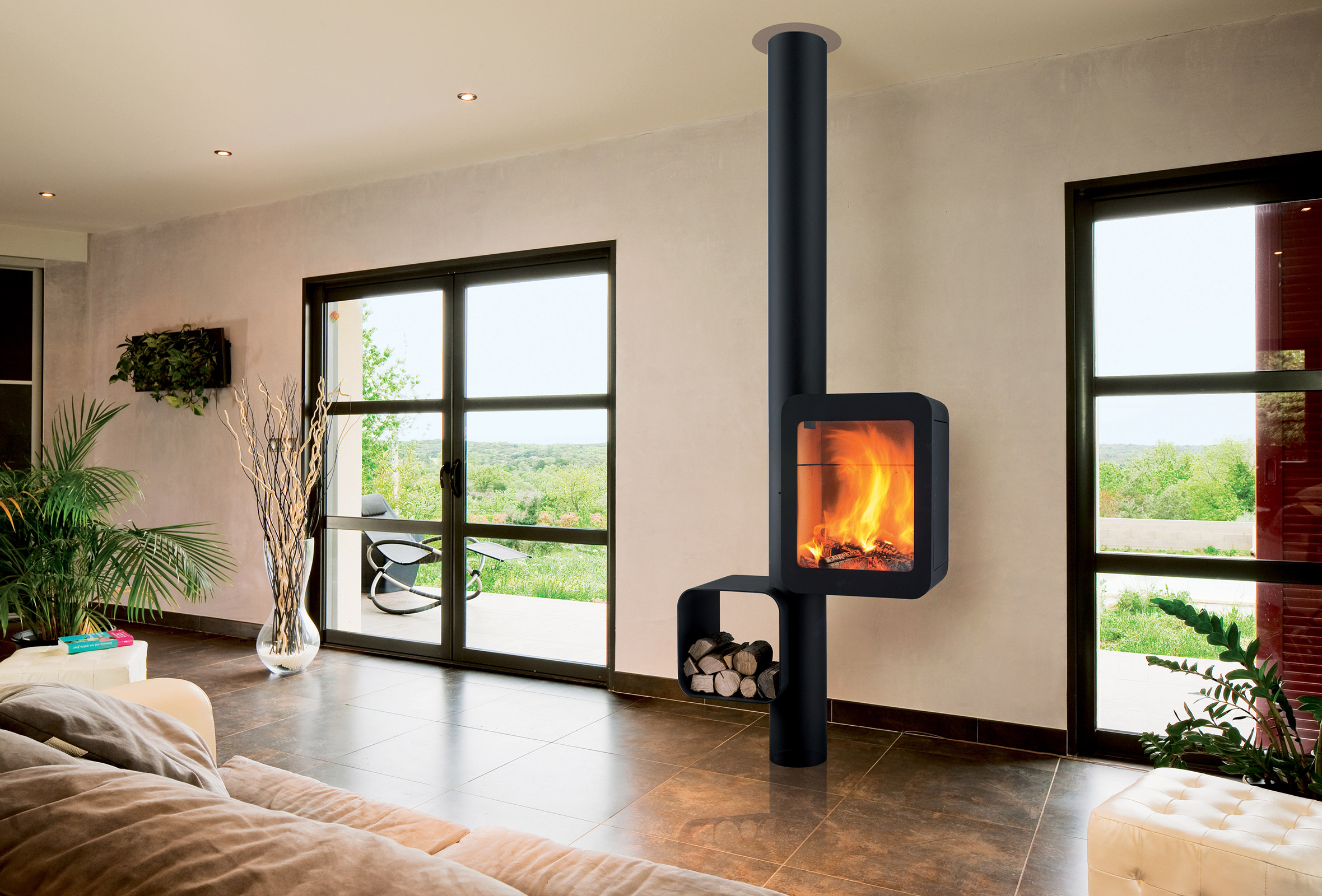
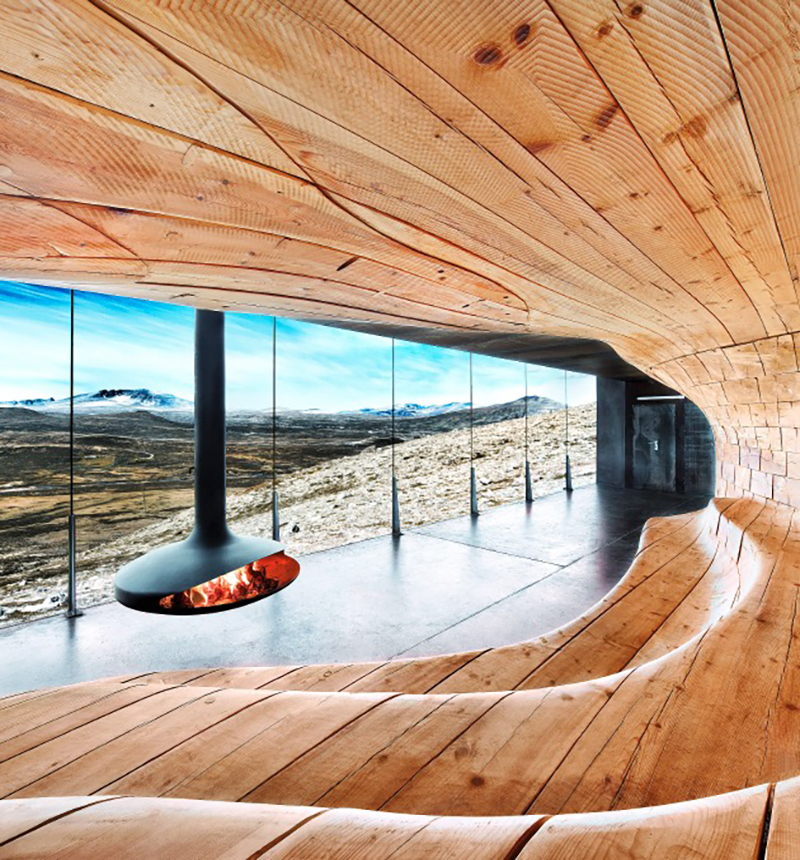
A central fireplace may either be suspended — accentuating lightness and freeing the floor space (see our article on suspended fireplaces) — or floor-standing.
Suspended models require structural load-bearing support from above. Their feasibility therefore depends on the strength of the ceiling and the building structure itself. Where suspension is not possible, floor-standing self-supporting models provide a suitable alternative while preserving a central installation. The flue — and in some cases the hood — nevertheless remains fixed to the ceiling.
The choice between these two configurations depends both on the desired architectural effect and on the possibilities offered by the existing structure.
Fire visibility: a key criterion when selecting a model
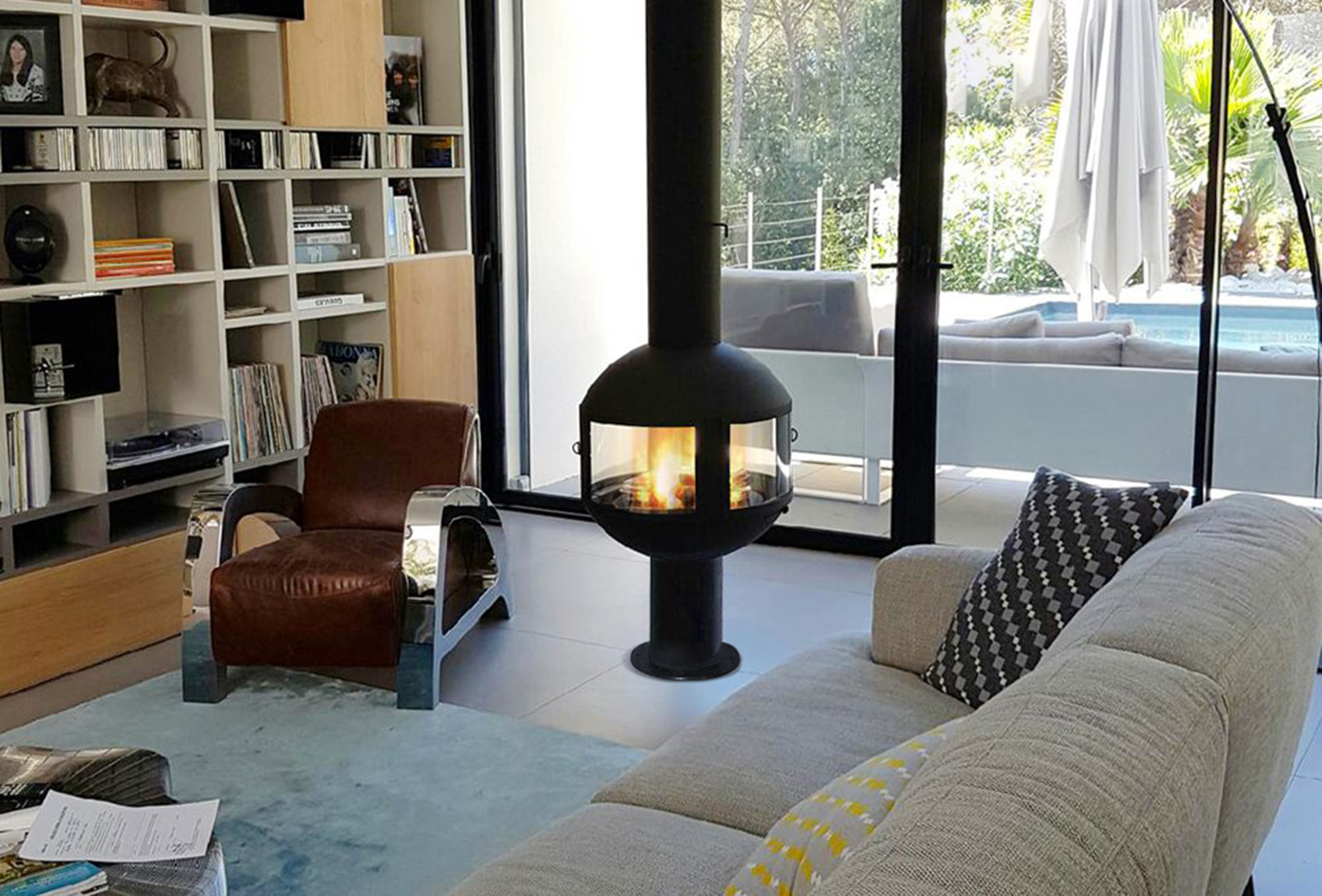
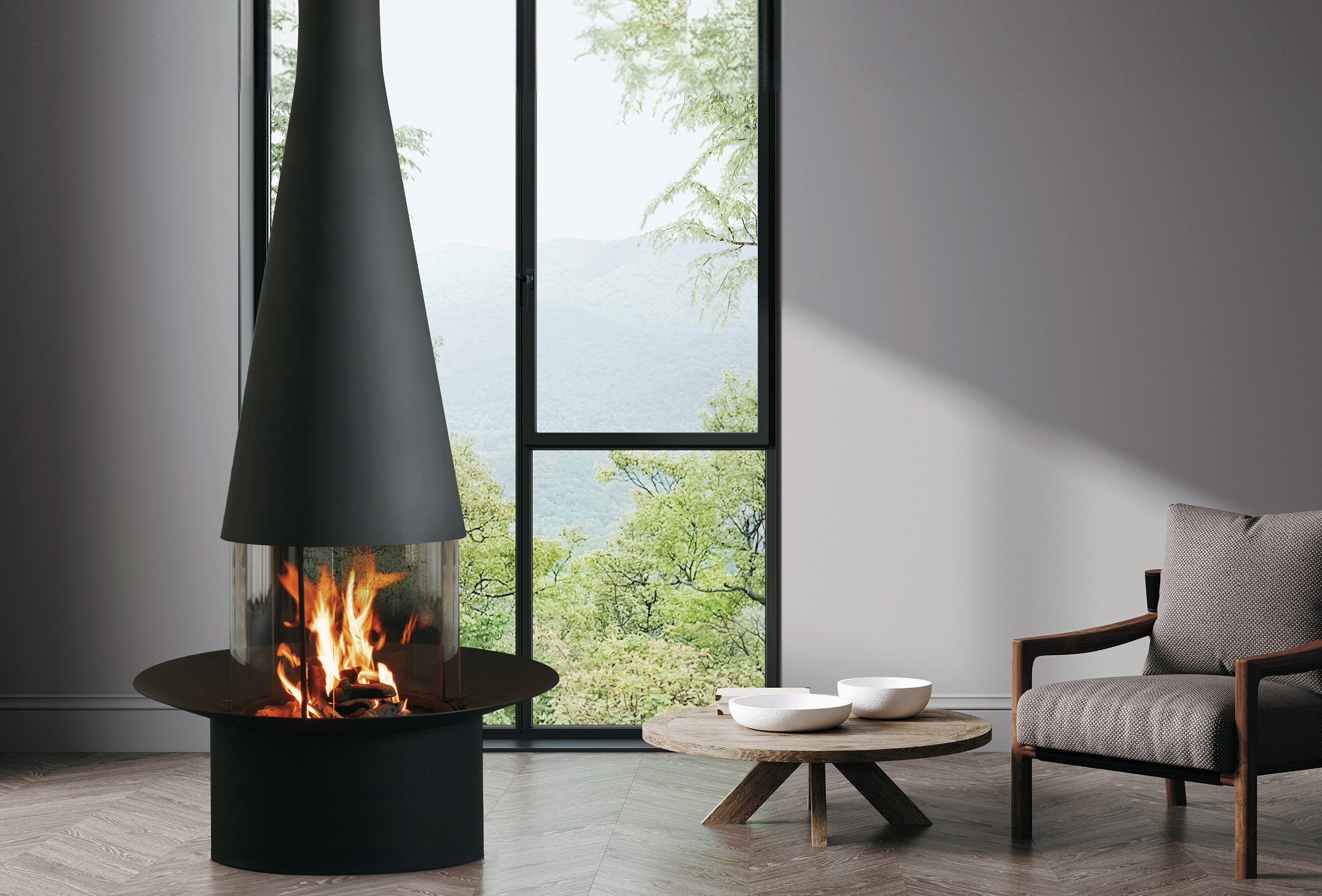
Not all central fireplaces offer the same perception of the fire. Depending on the model, the fire may be enclosed behind a protective glass panel or fully glazed on all sides. Floor-standing models are generally fixed, whereas suspended models can offer rotation through up to 360 degrees.
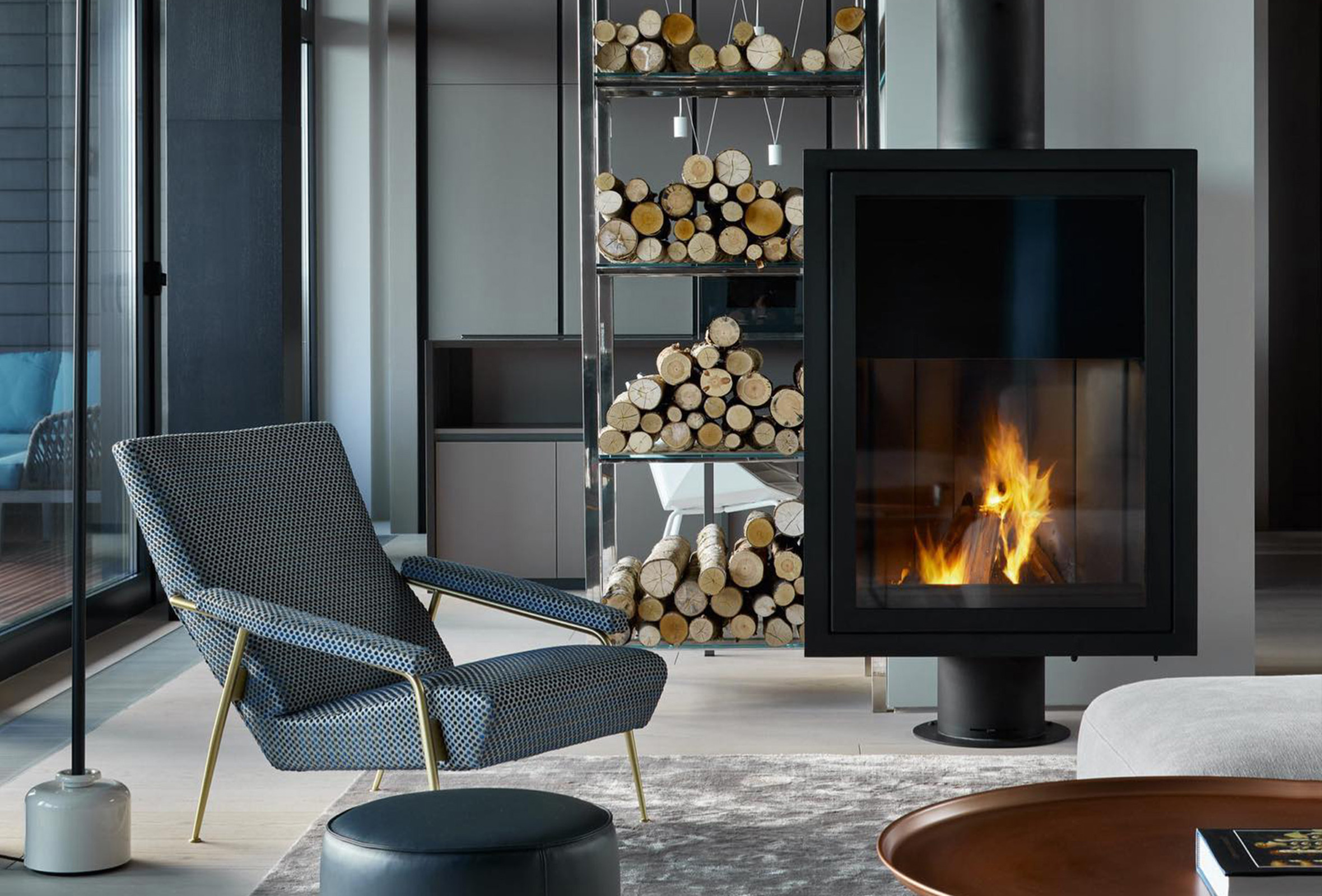
This characteristic directly influences the fireplace’s placement within the room. A largely glazed fireplace allows the flames to be viewed from multiple points in the space, whereas a closed front-facing model requires more precise orientation.
The visibility of the fire therefore shapes the experience of the room. It should be considered from the earliest stages of the project, according to intended use and desired sightlines.
Essential considerations when installing a central fireplace
Installing a central fireplace requires careful planning of the flue system in the case of wood-burning or gas models. This may involve passing through one or several levels before exiting through the roof.
By contrast, smokeless solutions requiring no flue system — such as bioethanol or electric technologies — offer far greater freedom of installation. They make it possible to consider layouts where a traditional fireplace would not be technically feasible.
The choice of energy source therefore directly affects both technical feasibility and integration possibilities.
Safety distances and integration within the home
Like any fireplace, a central model must comply with safety distances in relation to surrounding materials and household equipment.
For high-heat appliances such as wood-burning fireplaces, several elements must be taken into account, including:
- the presence of underfloor heating systems (plastic piping),
- the proximity of sensitive architectural features such as large glazed areas, or equipment including televisions and hi-fi systems,
- ventilation systems in low-energy buildings. In such cases, the installation should favour a sealed balanced-flue model drawing combustion air directly from outside without disturbing the interior atmosphere.
These constraints vary according to the chosen energy source and the fireplace’s heat output. When anticipated from the beginning of the project, they integrate naturally into the interior design while ensuring safe operation.
FOCUS: A MULTIFACETED APPROACH TO THE CENTRAL FIREPLACE
Two configurations: suspended or floor-standing
Focus central fireplaces are available in two configurations: suspended or floor standing. This approach allows the brand to respond to different structural constraints while positioning the fire at the heart of the architectural volume, independently of any wall.
Some models favour a frontal view of the fire, while others offer wider or even see-through visibility. The diversity of fireplaces — from the most compact to the most spectacular —, together with the variety of designs and opening systems, allows each model to be selected according to the volume of the space. Each model therefore responds to a particular way of inhabiting space, according to intended use and desired placement.
Two purposes: heating or atmosphere
Depending on the project and the expectations of the user, a central fireplace may fulfil two distinct purposes: heating or ambience. Heating models, available in wood-burning or gas versions, are closed glazed fireplaces delivering high energy performance. Their efficiency ensures effective and long-lasting heating for the home.
Decorative models — available exclusively in gas versions at Focus — follow a more ambience-driven approach. They may operate on mains gas, with biogas compatibility, or on propane or butane cylinders. Gas supply is routed through the floor. These fireplaces offer exceptional ease of use, with instant ignition, remote control operation and precise flame adjustment.
French steel craftsmanship recognised with the EPV label
All Focus fireplaces and design stoves — each requiring highly specialised expertise — are manufactured in France within the brand’s own workshop in Provence, in the south of France.
The strength of the manufacture lies in its complete control of the production chain, which is entirely integrated in-house. This organisation makes it possible to combine artisanal craftsmanship with innovation, enabling the models to evolve towards contemporary uses — Ecodesign wood-burning, gas, bioethanol and electric technologies — while complying with current regulations without ever altering the original design. This production excellence is recognised by the French state through the “Entreprise du Patrimoine Vivant” (EPV) label, awarded to companies distinguished for their outstanding artisanal and industrial expertise.
Focus relies on a network of approved partners trained by the brand to support projects for private clients, architects and hospitality professionals. Consultancy, technical expertise and on-site measurements are all carried out by the partner. The project is then submitted to Focus for validation before manufacturing begins. This organisation guarantees the coherent integration of the fireplace and a high standard of execution within demanding architectural contexts.








 Gas
Gas