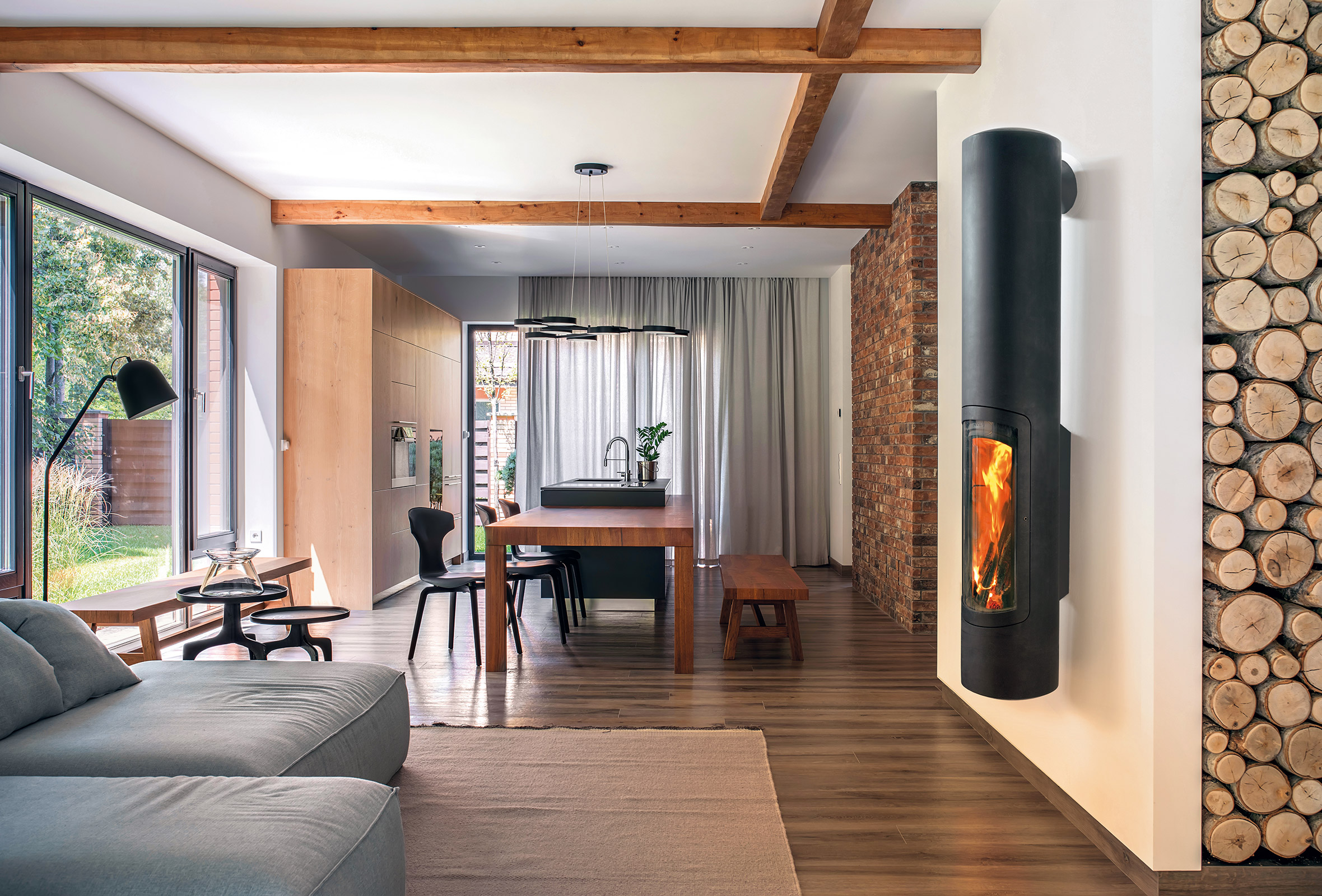
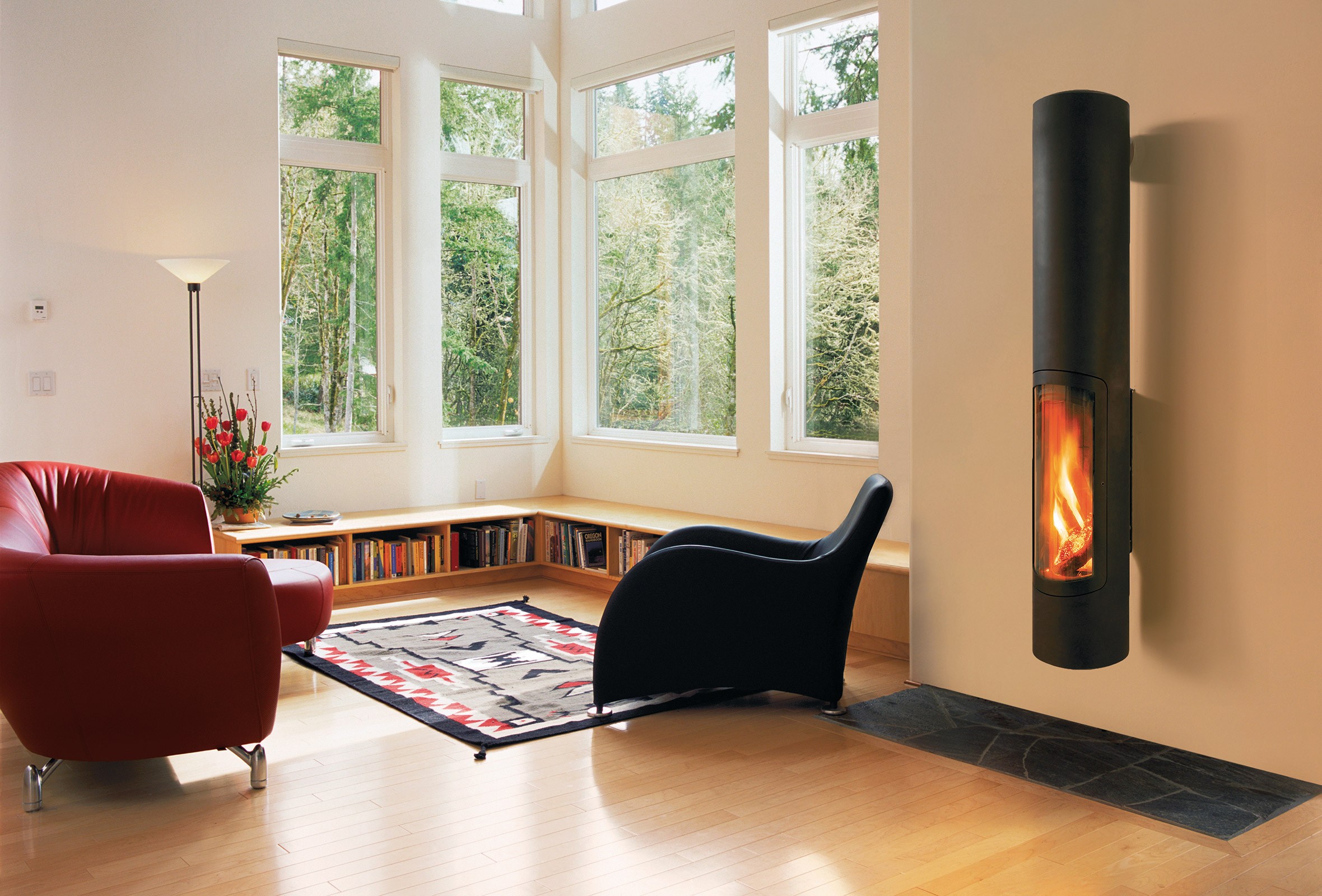
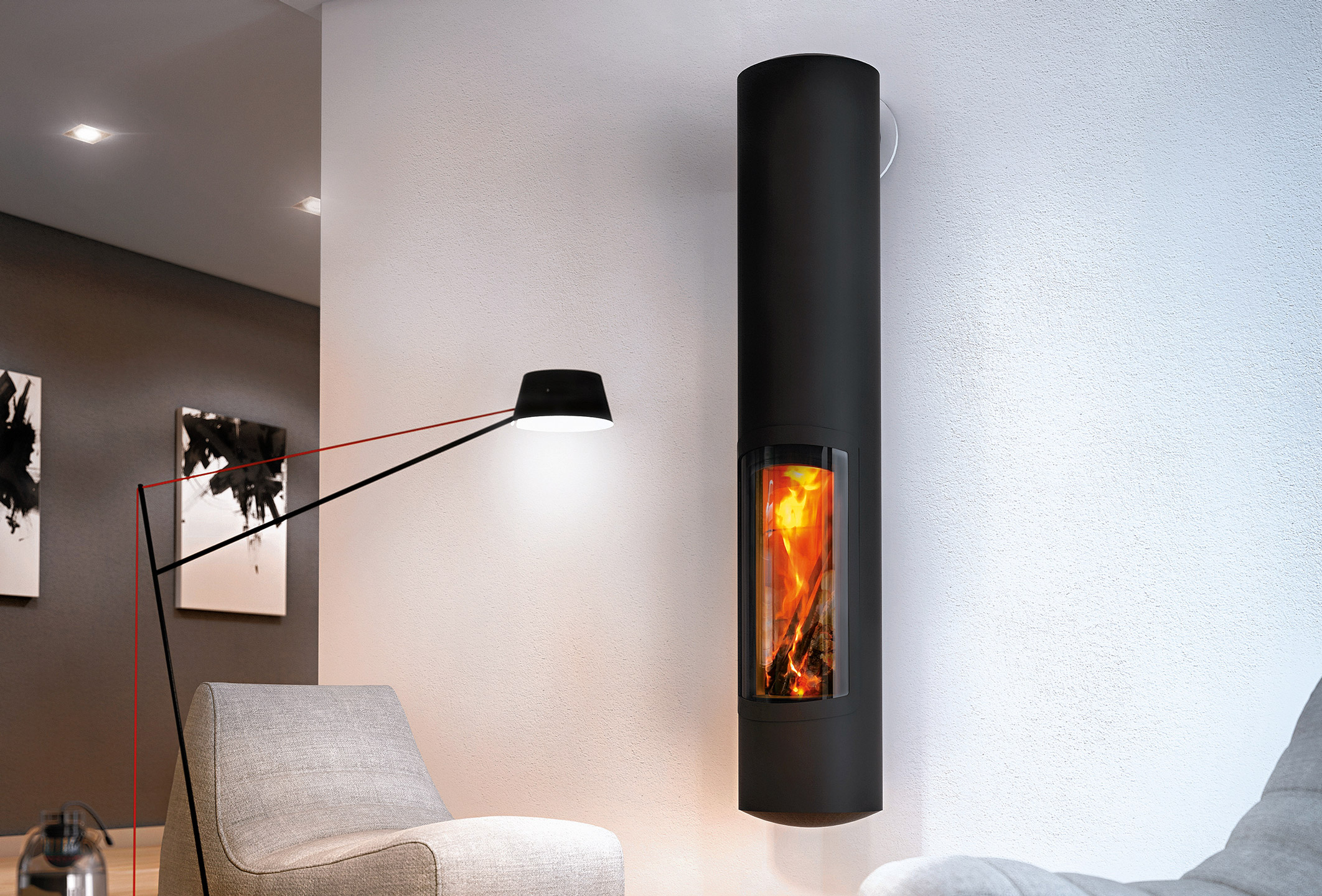
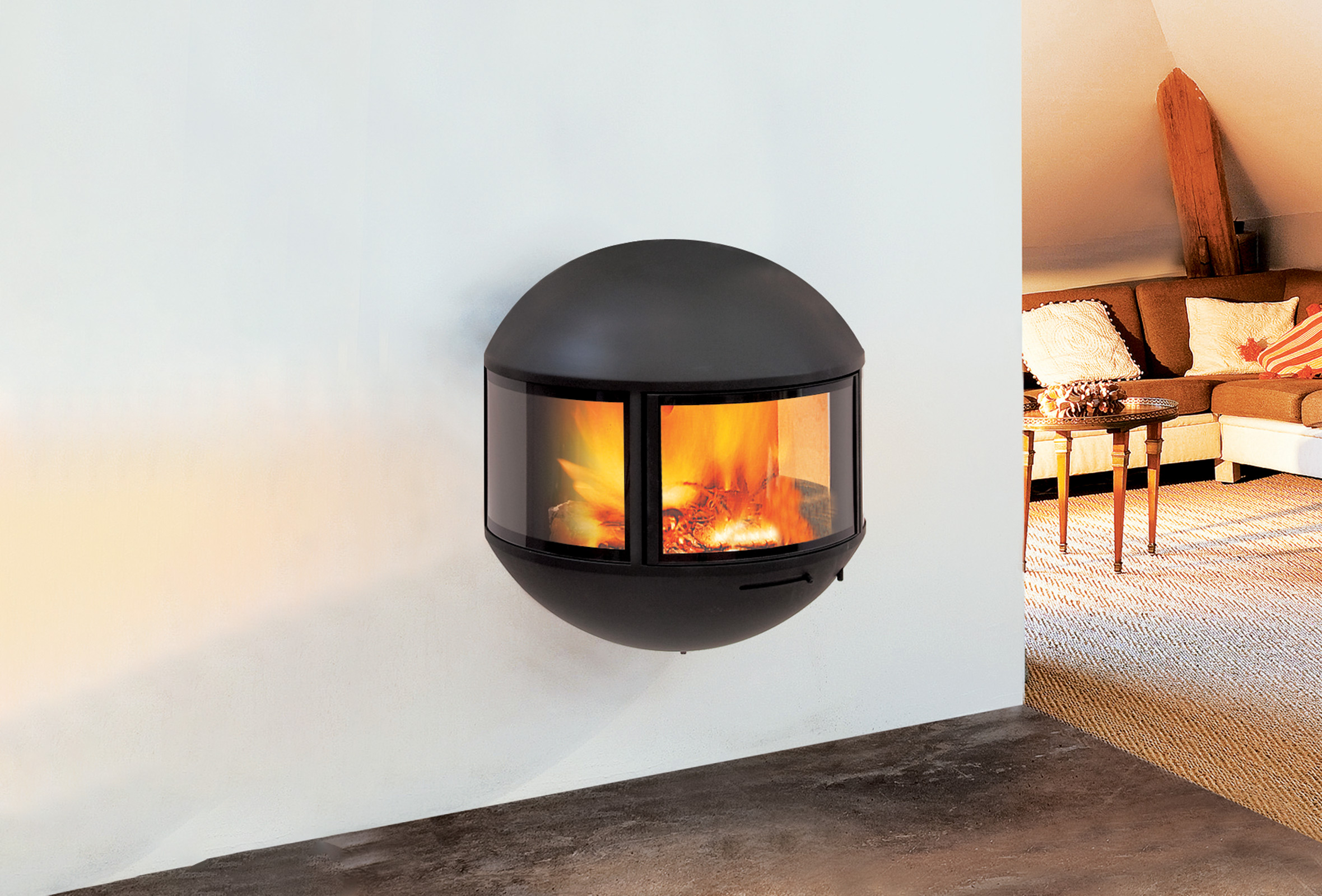
Positioned
against a wall, a wall-mounted fireplace maintains a particular relationship
with architecture. Unlike a modern fireplace in a
central configuration, it does not occupy the middle of the room. It becomes
part of the wall, enters into dialogue with it and contributes to enhancing
its presence.
This
type of installation preserves circulation space while giving the fire a strong
presence. The choice of model, the dimensions of the wall and the
technical constraints all directly influence its integration. Both an
architectural element and a heating appliance, the wall-mounted fireplace finds
its place in a wide variety of projects, from historic buildings to
contemporary architecture.
WHAT IS A WALL-MOUNTED FIREPLACE?
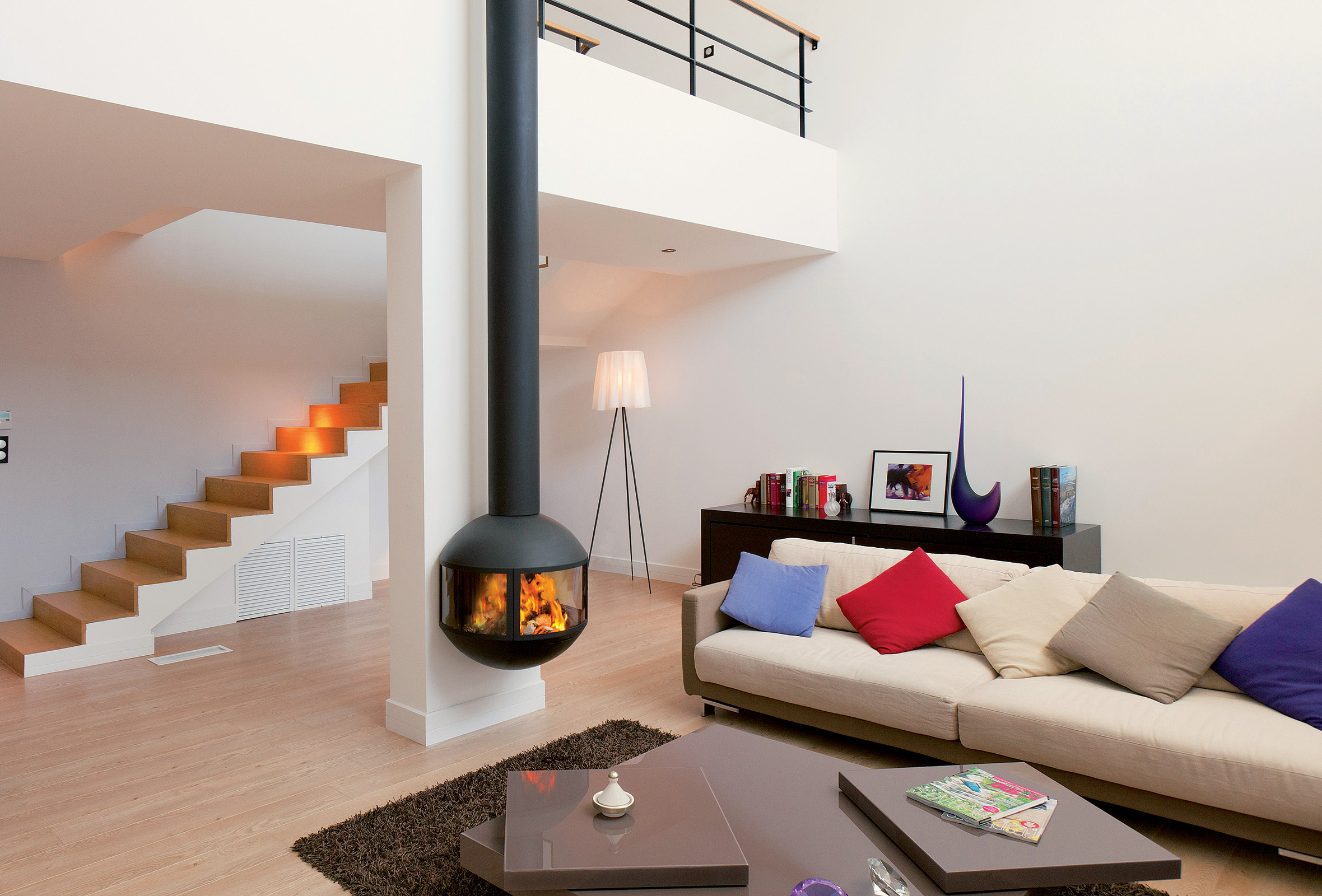
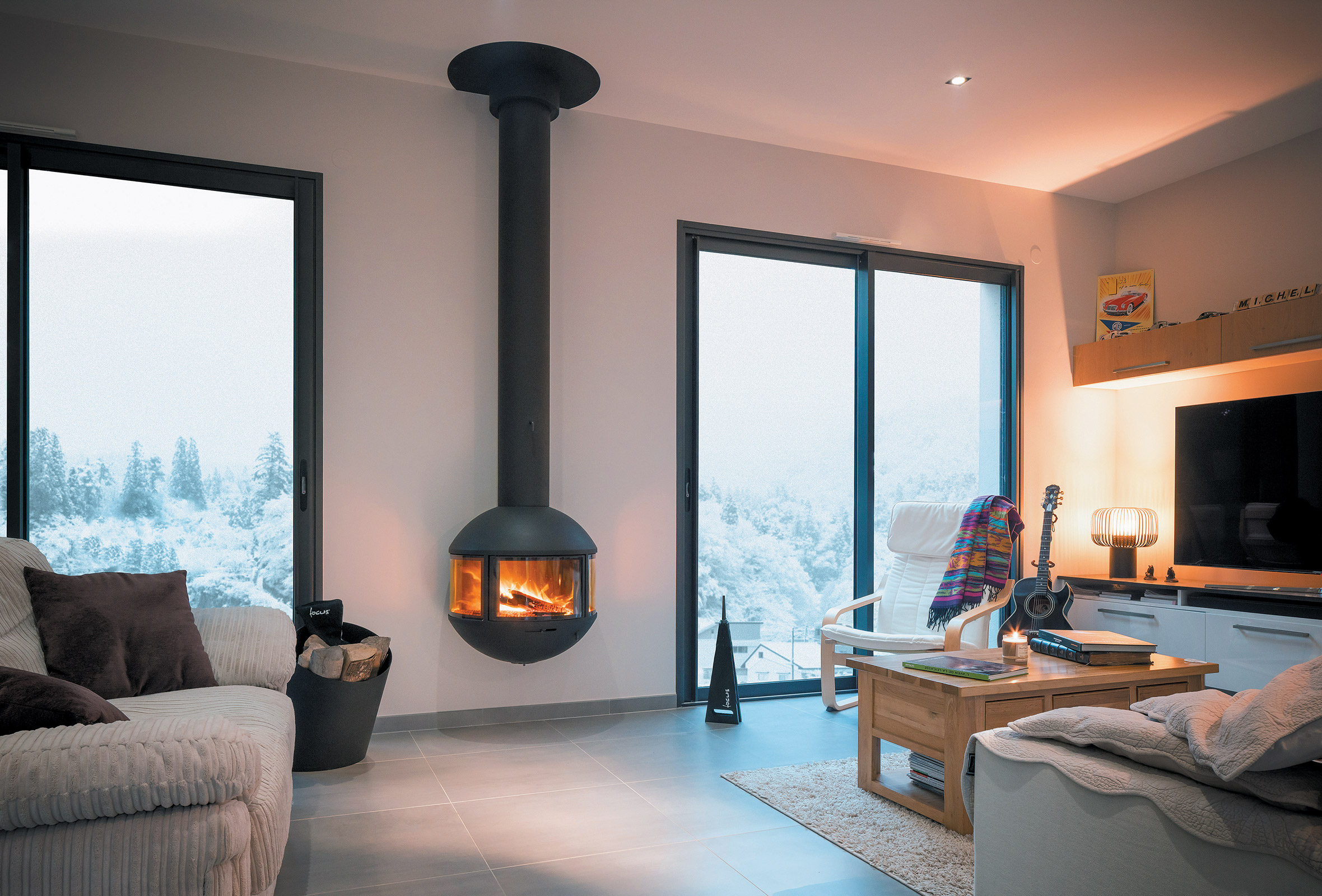
A fireplace fixed to the wall, offering a frontal
view of the fire
A
wall-mounted fireplace is a firebox fixed to a wall. Unlike a floor-standing
central fireplace or a suspended central
fireplace, it is not positioned at the heart of the volume but
forms part of an existing wall composition. This configuration encourages a
frontal view of the fire and creates a close relationship between the
firebox, the wall and the surrounding space.
Depending
on the model, the glazed surfaces of the firebox may provide a wider opening
towards the sides, but the fire is primarily viewed from the front.
An alternative to central fireplaces
The
choice between a wall-mounted fireplace and a central fireplace depends first
and foremost on the configuration of the space.
A
central fireplace occupies the heart of the room and organises life around the
fire. The wall-mounted fireplace follows a different approach. By positioning
itself against a wall, it frees up the centre of the space and preserves
circulation within the room.
This
configuration allows greater freedom in furniture arrangement. Furniture can
therefore be organised more freely within the volume of the room, facing the
wall-mounted fireplace. The fire retains a strong presence while leaving the
centre of the room available.
A configuration suited to spaces structured by walls
A
wall-mounted fireplace naturally finds its place in interiors where walls
already play a structuring role in the organisation of space. Unlike a central
fireplace, it does not seek to occupy the volume but rather to integrate
into an existing architectural composition.
The
materials that make up the walls contribute to the presence of the fire. The
fireplace becomes part of a broader composition in which architecture,
materials and firebox interact with one another. The wall-mounted fireplace
therefore contributes to enhancing the existing architecture rather than
creating a new autonomous element within the space.
WHY CHOOSE A WALL-MOUNTED FIREPLACE?
Freeing the centre of the room: a space-saving
solution
One
of the principal advantages of a wall-mounted fireplace lies in its ability to preserve
available space. By positioning itself against the wall, it does not occupy
the centre of the room and allows circulation around the furniture to remain
fluid.
This
configuration is particularly suitable when space is limited or when a room
must accommodate several uses without feeling crowded: a living room opening
onto a dining area, a reading corner, or a space largely opened towards the
outdoors. The fireplace then becomes an anchor point without disrupting
everyday activities.
Enhancing a wall: creating a focal point
A
wall-mounted fireplace does not create the same effect on the wall depending
on how it is connected.
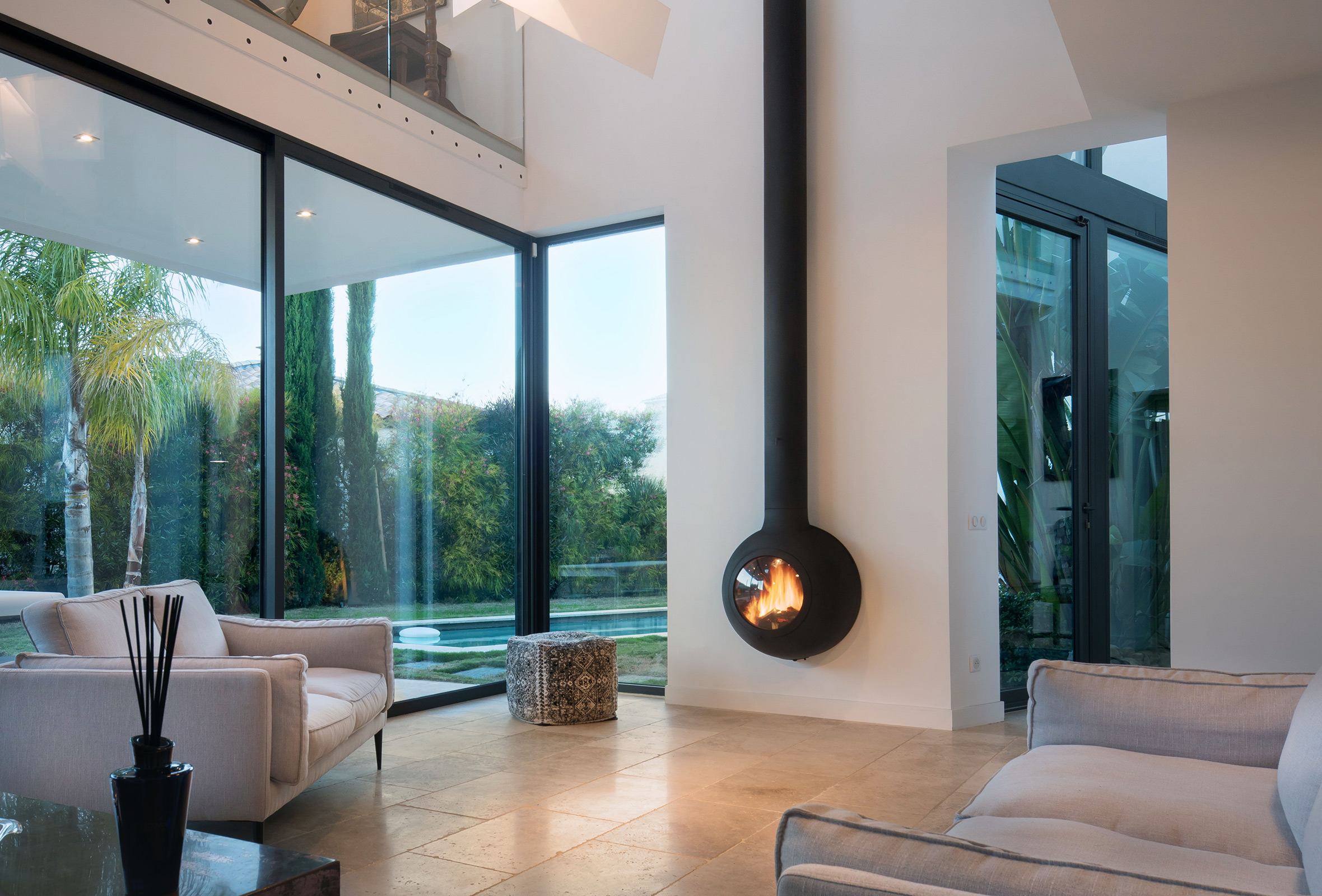
In
the case of a vertical flue connection, the firebox is extended by a visible
flue linking it to the ceiling. Together, they create a strong vertical axis on
the wall and emphasise the height of the room.
In
the case of a rear flue connection, the flue disappears behind the wall. The
firebox then becomes the sole visual anchor point on the wall.
Finally,
depending on the proportions of the chosen model, the wall-mounted fireplace
may remain discreet or, conversely, become the dominant architectural feature
of the wall on which it is installed.
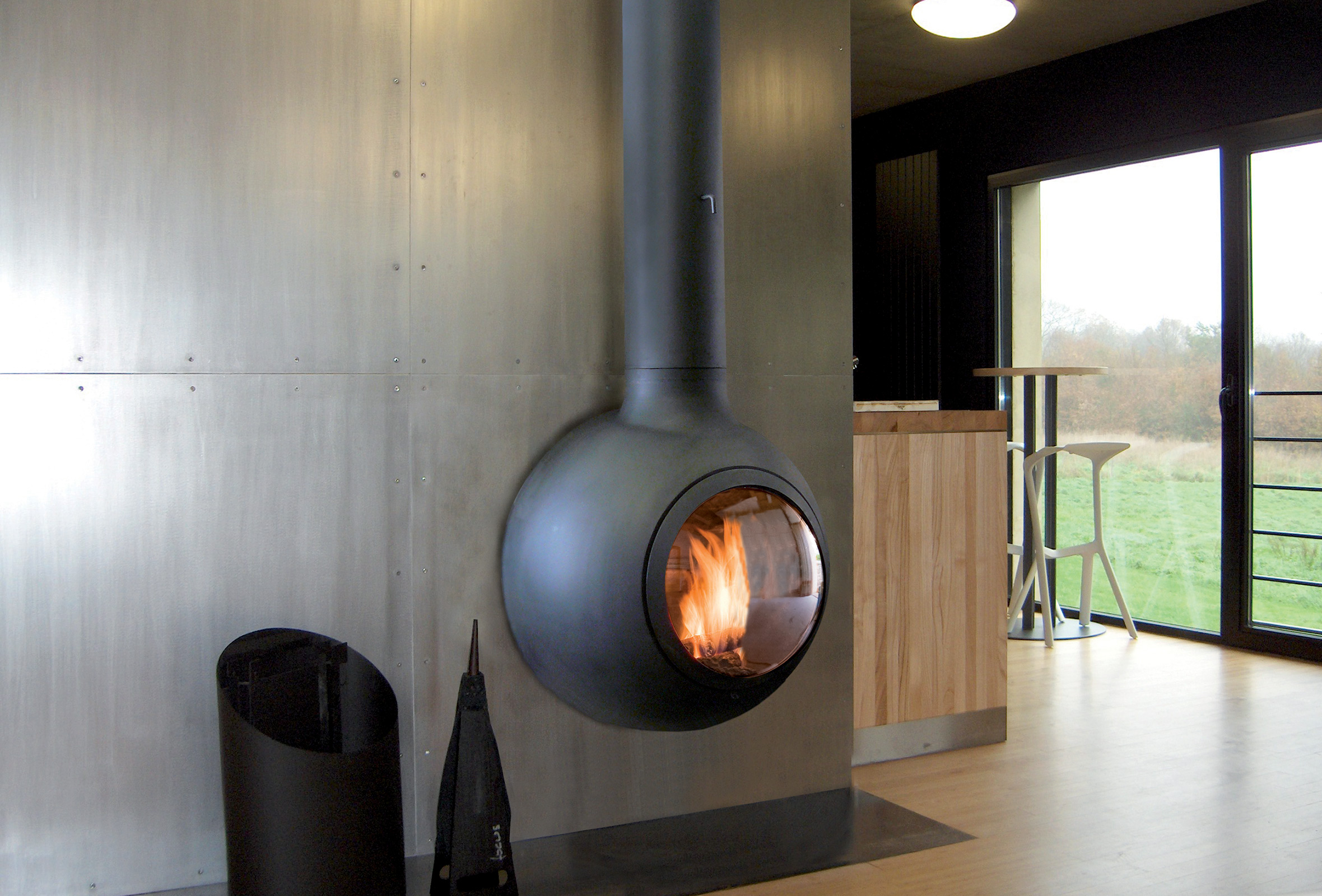
Enhancing a stone, concrete or brick wall
A
wall-mounted fireplace maintains a direct dialogue with the surface on which it
is installed. A stone or brick wall naturally highlights the steel of the
fireplace through the contrast of materials. Against exposed concrete,
its integration belongs to a more contemporary aesthetic.
The
choice of model cannot therefore be separated from the material that supports
it. The dimensions of the wall, its texture, its colour and its presence within
the space all contribute to the balance of the project.
In
some interiors, the fireplace reveals an existing wall. In others, it becomes the
opportunity to design a wall specifically conceived to accommodate the fire
WHAT SHOULD BE CONSIDERED WHEN INSTALLING A
WALL-MOUNTED FIREPLACE?
Installing
a wall-mounted fireplace requires careful consideration of both the
characteristics of the space and those of the chosen model. The volume of the
room, the nature of the supporting wall, the flue route and the required safety
distances all determine the feasibility of the project.
Finding the right balance between the model and the
wall surface
A
wall-mounted fireplace forms part of an architectural composition. Its
selection depends as much on the volume of the room as on the dimensions of the
wall that will accommodate it.
A
large-scale model requires sufficient wall surface to fully express its
presence. Conversely, a more compact fireplace may be better suited to a narrow
wall or a smaller room.
The
objective is to find the right balance between the proportions of the model,
those of the supporting wall and those of the room as a whole.
The supporting wall: constraints and precautions
The
nature of the wall is a key aspect of the project study. It must be
sufficiently resistant and non-combustible to support the fireplace and
comply with the safety requirements associated with the heat produced by the
appliance.
Stone,
concrete and exposed brick walls generally provide suitable support. When
covered with plaster, additional protection may be required.
In
the case of a plasterboard wall, it is necessary to choose the non-combustible
version, designed to meet heat resistance requirements. Assessing the
supporting wall forms part of the essential preliminary checks before any
installation.
Vertical flue or rear flue connection: what is the
difference?
Most
wall-mounted fireplaces are connected to a vertical flue exiting through the
roof. This configuration, known as a vertical flue connection, is the most
common installation method.
Some
Focus models are also available with a rear flue connection when the supporting
wall directly adjoins the exterior. In this case, the flue passes
horizontally through the wall, with no visible flue in the upper floors of the
building.
Safety distances to be respected
Like
any wood-burning heating appliance, a wall-mounted fireplace must comply with
safety distances in relation to surrounding materials and furnishing elements.
These
requirements vary according to the model and configuration. They concern, in
particular, wall finishes, furniture and equipment located close to the
fireplace.
The technical study carried out
beforehand makes it possible to verify the compliance of the project and ensure
an installation suited to the characteristics of the space.
FOCUS WALL-MOUNTED FIREPLACES: WOOD-BURNING MODELS
Focus
wall-mounted fireplaces belong to the brand’s heating collection.
Wood-fired, they combine the presence of fire with energy performance that
meets today’s requirements. Among them, some models occupy a special place in
the creative history of Focus.
Edofocus and Emifocus: Japanese influence in the work of Dominique Imbert
The
influence of Japan can be found throughout several creations by Dominique
Imbert, founder of Focus. It is particularly evident in the Emifocus and the
Edofocus, two wall-mounted models characterised by the simplicity of their
lines and the restraint of their presence.
Created
in 1972, the Emifocus takes its name from the Japanese first name Emi, composed
of characters associated with beauty and benevolence. Its refined design
reflects Dominique Imbert’s interest in Zen aesthetics and in forms
reduced to their essential expression.
The
Edofocus was created in 1990 as part of a residential project in Japan. Its
name refers to the Edo period, an era of political stability and cultural
development that profoundly shaped Japanese history.
Beyond
their origins, these two models reflect the same pursuit: that of a controlled
presence of fire within the space.
Slimfocus: a wall-mounted version with rear flue
connection
The
Slimfocus was designed to respond to the constraints of spaces where every
centimetre matters. Its particularly narrow diameter — just 33 cm — allows it
to be integrated into configurations where a larger model would not fit.
Available
as a wall-mounted version with a rear flue connection, it provides an ideal
solution when the supporting wall directly adjoins the exterior. This
configuration avoids the need to route a flue through the upper levels
of the house.
Through
both its proportions and its visual discretion, the Slimfocus illustrates
another way of integrating fire into the wall.
Wall-mounted fireplaces manufactured in France
Like
all Focus models, the wall-mounted fireplaces are manufactured in France within
Focus’s own manufacture, located in Provence. Steel is shaped there through
expertise combining industrial processes with skilled craftsmanship:
forming, assembly, welding, finishing and the inspection of every component.
This
expertise earned the company the Entreprise du Patrimoine Vivant (EPV) label, a
distinction awarded by the French State to companies possessing exceptional
know-how.
Each
project is supported by a Focus-approved retailer, trained both in technical expertise
and in the spirit of the brand, in order to ensure an integration suited to
the characteristics of the space and to the requirements of the chosen model.








 Wood
Wood